
The future of work is changing fast. Here’s what employers are actually looking for in 2026.
A few years ago, companies mainly hired based on degrees, experience, and job titles.
In 2026, that is no longer enough.
Today, employers want skills.
Whether you are a student, fresher, working professional, freelancer, or someone planning a career switch, the biggest question is:
“What skills should I learn to stay relevant and get hired?”
The answer is hidden inside thousands of real job postings.
After analyzing hiring trends from LinkedIn, global workforce reports, AI company requirements, technology hiring trends, and India’s job market, one thing becomes clear:
The companies growing fastest are not just looking for coders.
They are looking for people who can work with AI, solve business problems, analyze data, communicate effectively, and continuously learn.
In this guide, we will break down the skills companies are actively hiring for in 2026 and explain why they matter.
The Job Market Has Changed
The rise of Artificial Intelligence has transformed the hiring landscape.
Tasks that once required hours can now be completed in minutes.
This doesn’t mean jobs are disappearing.
It means job requirements are evolving.

According to the World Economic Forum, millions of new jobs are expected to be created by 2030, but many existing roles will require significant reskilling. Technology skills and human skills will become equally important.
LinkedIn’s 2026 Skills on the Rise report also highlights a major shift toward AI skills, leadership abilities, communication, business development, and cross-functional collaboration.
The message is simple:
The winners in 2026 will not be those who avoid AI. They will be those who learn to work with it.
Top Skills Companies Are Hiring for in 2026
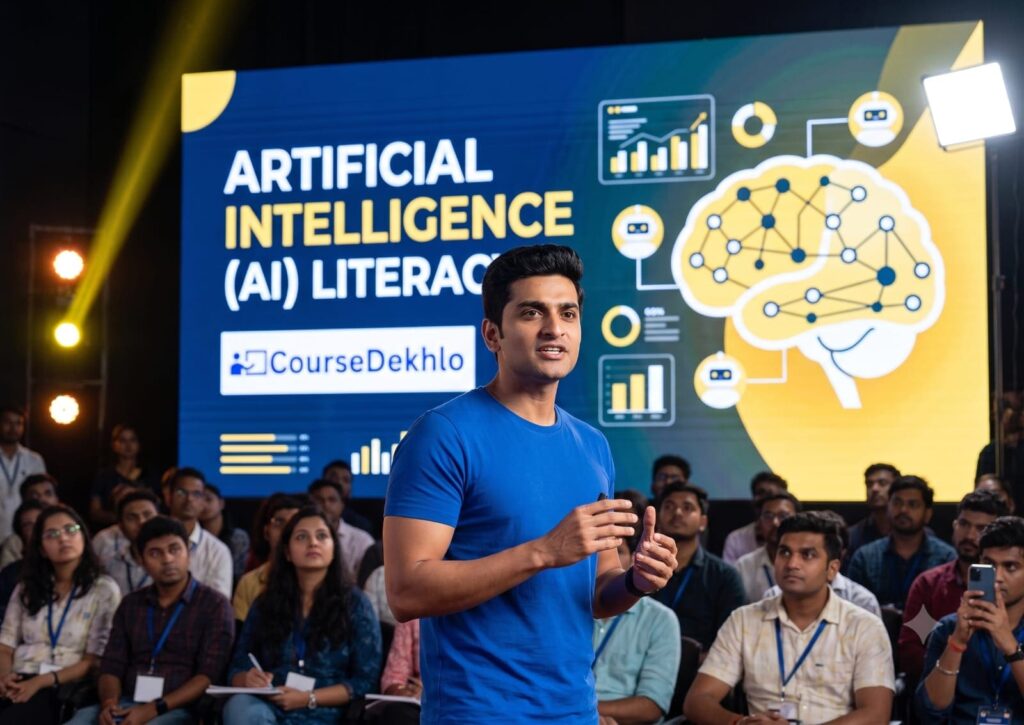
1. Artificial Intelligence (AI) Literacy
This is the most important skill of the decade.
Notice that we are not saying “AI Engineer.”
We are saying “AI Literacy.”
Every industry is adopting AI:
- Marketing
- Finance
- HR
- Education
- Healthcare
- E-commerce
- Software Development
- Customer Support
Employers now expect candidates to understand:
- How AI works
- How AI tools can improve productivity
- How to use AI responsibly
- How to integrate AI into workflows
Even non-technical jobs increasingly mention AI familiarity as a preferred skill.
Learn:
- ChatGPT
- Claude
- Gemini
- Microsoft Copilot
- AI productivity workflows
Career Impact
People who know how to use AI effectively are becoming significantly more productive than those who do not.
2. Prompt Engineering
Prompt Engineering has evolved from a buzzword into a practical workplace skill.
Companies are looking for professionals who can communicate effectively with AI systems.
A strong prompt can save hours of manual work.
Modern job descriptions increasingly mention the following:
- Prompt Design
- AI Workflow Creation
- LLM Utilization
- AI Content Optimization
LinkedIn’s research shows AI-related skills are among the fastest-growing globally.
Learn:
- Structured prompting
- Role prompting
- Chain-of-thought workflows
- AI automation
3. Data Analysis
Data is still king.
Every business generates data.
Very few people know how to extract meaningful insights from it.
Companies are hiring professionals who can:
- Analyze trends
- Create reports
- Make data-driven decisions
- Visualize information
Learn:
- Excel
- SQL
- Power BI
- Tableau
- Google Looker Studio
Why It Matters
Even marketing, sales, HR, and operations teams increasingly require data skills.

4. Generative AI
Generative AI has become one of the fastest-growing areas in technology hiring.
Many job postings now mention:
- Large Language Models (LLMs)
- AI Applications
- Content Generation
- AI Product Development
Recent AI hiring trends show growing demand for GenAI and LLM-related skills.
Learn:
- OpenAI APIs
- Gemini APIs
- Claude APIs
- AI agents
- RAG systems
5. Cybersecurity
As AI adoption grows, cybersecurity becomes even more critical.
Companies are spending billions protecting their data.
Cybersecurity remains one of the most future-proof career fields.
Learn:
- Network Security
- Ethical Hacking
- Security Operations
- Cloud Security
- Risk Management
Career Roles
- Cybersecurity Analyst
- Security Engineer
- SOC Analyst
- Ethical Hacker

6. Cloud Computing
Nearly every modern company uses cloud infrastructure.
Whether it’s AWS, Azure, or Google Cloud, organizations need professionals who understand cloud systems.
Recent hiring trends show strong demand for cloud talent, especially within India’s rapidly growing Global Capability Centres (GCCs).
Learn:
- AWS
- Microsoft Azure
- Google Cloud Platform
Career Roles
- Cloud Engineer
- DevOps Engineer
- Solutions Architect
7. Software Development + AI
Coding is not dead.
In fact, developers who know AI are becoming more valuable.
Companies increasingly want developers who can:
- Build AI-powered products
- Integrate APIs
- Create automation systems
- Work with LLMs
High-Demand Languages
- Python
- JavaScript
- Java
- TypeScript
Python continues to dominate AI-related hiring.
8. Digital Marketing
Businesses need customers.
That means digital marketing remains essential.
However, the skill set has changed.
Modern marketers need the following:
- SEO
- Content Marketing
- AI Content Creation
- Performance Marketing
- Analytics
Why It Matters
Companies want marketers who can combine creativity with AI tools.

9. Communication Skills
This surprises many people.
Despite all the technological changes, communication remains one of the most valuable skills.
LinkedIn’s Skills on the Rise report highlights communication, stakeholder management, mentorship, collaboration, and leadership as rapidly growing skills.
Companies want people who can:
- Present ideas clearly
- Explain complex concepts
- Work across teams
- Lead discussions
10. Analytical Thinking
The World Economic Forum consistently ranks analytical thinking among the most important workplace skills.
AI can generate information.
Humans still need to:
- Evaluate information
- Make decisions
- Solve problems
- Think critically
This is why analytical thinkers will remain highly employable.
11. Leadership and People Management
As companies automate routine work, leadership becomes even more important.
Businesses need professionals who can:
- Manage teams
- Drive projects
- Make decisions
- Mentor others
LinkedIn’s latest data shows leadership-related skills continuing to grow rapidly.

12. Business Development and Sales
Technology alone doesn’t generate revenue.
People do.
Companies are actively hiring professionals who can:
- Build partnerships
- Acquire customers
- Drive revenue growth
- Expand markets
Business development is one of the strongest non-technical career paths in 2026.
The Skills That Are Becoming More Valuable Because of AI

Many people think AI only increases demand for technical skills.
The opposite is also true.
Research increasingly shows that as AI handles routine work, employers value higher-order human skills even more.
These include:
- Creativity
- Leadership
- Emotional Intelligence
- Problem Solving
- Communication
- Collaboration
- Adaptability
The future belongs to professionals who combine human intelligence with artificial intelligence.
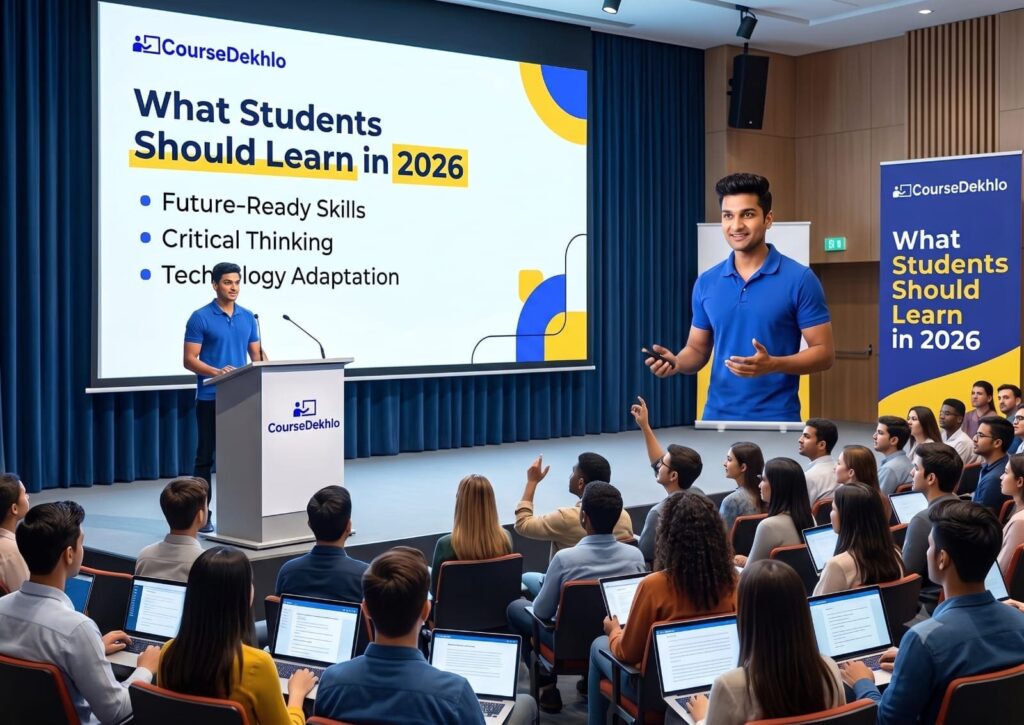
What Students Should Learn in 2026
If you are in college today, focus on:
- AI Literacy
- Excel
- Data Analysis
- Communication
- Digital Marketing
- Basic Coding
- Problem Solving
You do not need to master everything.
Start with one skill and build gradually.
What Working Professionals Should Learn
If you already have a job:
- Learn AI tools related to your field.
- Improve data literacy.
- Build automation skills.
- Strengthen communication and leadership abilities.
The goal is not to compete against AI.
The goal is to become better because of AI.

How CourseDekhlo Helps You Choose the Right Skills
One of the biggest challenges today is not finding courses.
It’s finding trustworthy information.
Thousands of workshops, bootcamps, mentorship programs, and online courses launch every month.
Many make big promises.
Very few help learners understand whether a course is actually worth their time and money.
That’s where CourseDekhlo comes in.
At CourseDekhlo, we review:
- AI workshops
- Digital marketing courses
- Career-focused bootcamps
- Creator-led programs
- Skill development courses
- Professional certifications
Our goal is simple:
Help learners make informed decisions before investing their money.
Instead of buying courses based only on advertisements or influencer promotions, learners can read detailed reviews, comparisons, and insights to choose the right learning path.

FAQs: Skills Companies Are Hiring in 2026
What is the most in-demand skills companies are hiring for in 2026
Artificial Intelligence (AI) literacy is currently the most in-demand skill across industries. Companies are increasingly looking for professionals who can use AI tools, automate workflows, analyze data, and improve productivity using AI. Alongside AI literacy, the most sought-after skills include Prompt Engineering, Data Analytics, Cloud Computing, Cybersecurity, Software Development, Communication, and Analytical Thinking. Recent hiring data from LinkedIn and industry reports show that employers are prioritizing skills that combine AI expertise with strong problem-solving and communication abilities.
Is coding required for AI jobs?
No, coding is not required for all AI jobs. While roles like AI Engineer, Machine Learning Engineer, and Data Scientist usually require programming skills, many AI-related careers such as Prompt Engineer, AI Content Specialist, AI Project Manager, AI Trainer, and AI Operations Specialist can be entered with little or no coding knowledge. However, having a basic understanding of AI tools and workflows can significantly improve your career opportunities in 2026.
Can I work in AI without coding?
Yes. Many AI-related roles do not require coding skills, including AI content creation, prompt engineering, AI project management, AI operations, AI-assisted marketing, and business-focused AI roles. However, understanding AI tools, workflows, and basic AI concepts can significantly improve your career opportunities and earning potential.
Can AI replace soft skills?
No, AI cannot fully replace soft skills. While AI can assist with tasks and communication, it cannot replicate human qualities such as leadership, emotional intelligence, creativity, critical thinking, empathy, and relationship-building. In fact, as AI automates routine work, companies are placing even greater value on these human skills because they remain essential for teamwork, decision-making, and managing people.
Final Thoughts
The biggest mistake in 2026 is waiting.
The job market is changing faster than ever.
Companies are hiring people who can:
- Work with AI
- Analyze data
- Solve problems
- Communicate effectively
- Adapt quickly
You do not need ten certifications.
You need relevant skills.
Start small.
Learn consistently.
Build projects.
Create proof of your skills.
Because in 2026, employers are increasingly hiring for what you can do—not just what degree you have.
And the sooner you start building those skills, the bigger your advantage will be.
You can also compare this workshop with other AI courses using our free Compare Courses tool on CourseDekhlo.
| ✅ Compare AI Courses |
| Want to compare with other courses? Check CourseDekhlo free Compare Courses Tool → |
⚠️ Affiliate Disclosure
This post is not sponsored, and we are not using any affiliate links. All opinions expressed are entirely our own.
At CourseDekhlo, we always focus on delivering value, clarity, and trust to our readers.
✅ Drop your thoughts in the comments below — your experience could help thousands of other learners make smarter choices.
Let’s build a smarter learning community together.