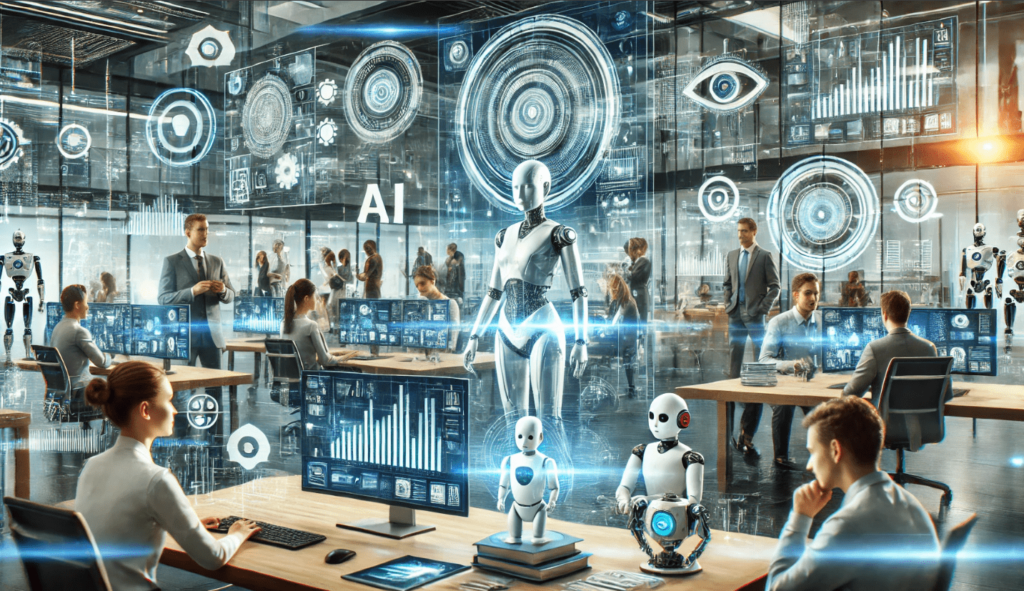

Artificial Intelligence (AI) has become one of the most discussed topics in the world. Every day, we see headlines saying the following:
- “AI will replace jobs.”
- “Millions of workers may be affected.”
- “Companies are hiring AI talent rapidly.”
- “New AI careers are emerging.”
As a result, students, professionals, freelancers, and job seekers are asking the same question:
Will AI take my job?
The short answer is:
Some jobs will change. Some tasks will be automated. Some roles may decline. But many new opportunities are also being created.
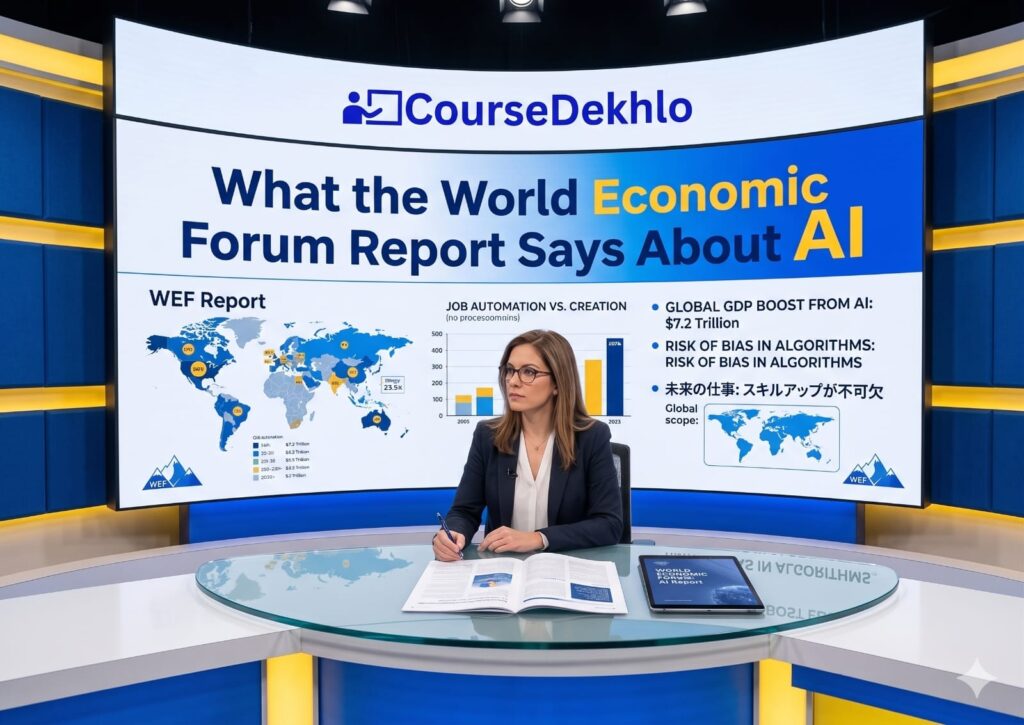
The future is not simply “AI vs Humans.”
The future is likely to be AI + Humans.
In this article, we will break down:
- How AI is impacting jobs right now
- Which jobs are growing
- Which skills companies are demanding
- What students and professionals should learn
- How CourseDekhlo can help you stay future-ready
Let’s begin.
Why Everyone Is Talking About AI and Jobs
The launch of tools like ChatGPT, Claude, Gemini, Midjourney, and AI-powered business software has changed how work gets done.
Today AI can:
- Write content
- Generate code
- Create images
- Analyze data
- Summarize documents
- Answer customer queries
- Automate repetitive tasks
Naturally, people worry about job security.
However, when we look deeper into research from the World Economic Forum, PwC, BCG, Anthropic, Goldman Sachs, and other organizations, the picture becomes more balanced.
The reality is that AI is not only eliminating tasks.
It is also creating entirely new opportunities.
What the Latest Research Says
According to the World Economic Forum’s Future of Jobs Report, technology, AI, and digital transformation will create millions of new opportunities over the next few years.
The report estimates that by 2030:
- Around 170 million new jobs could be created globally.
- Around 92 million jobs could be displaced.
- The net result could be approximately 78 million more jobs worldwide.
This means the job market is changing—not disappearing.
The biggest challenge is not AI itself.
The biggest challenge is whether workers update their skills quickly enough.

AI Is Replacing Tasks Faster Than Entire Jobs
One common misconception is the following:
“AI will replace whole professions.”
In reality, AI is currently replacing specific tasks more often than complete jobs.
For example:
Content Writer
AI can:
- Generate drafts
- Suggest headlines
- Summarize articles
But businesses still need humans to:
- Research deeply
- Understand audiences
- Build brand voice
- Make strategic decisions
Software Developer
AI can:
- Generate code snippets
- Fix bugs
- Explain programming concepts
But developers still:
- Design systems
- Understand business needs
- Review AI-generated code
- Solve complex problems
Marketing Professional
AI can:
- Generate ad copy
- Create social media captions
- Analyze performance data
But marketers still:
- Build campaigns
- Understand customer psychology
- Create strategy
- Make business decisions
In many industries, AI acts more like an assistant than a replacement.
Jobs That Could See the Biggest Changes
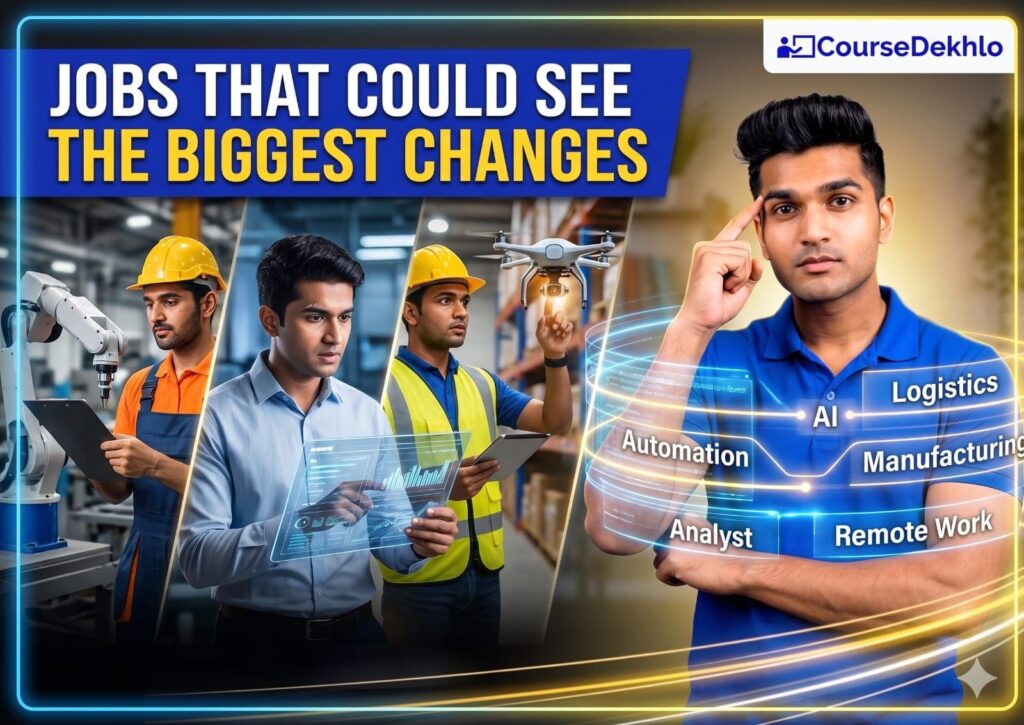
AI is most effective when work is:
- Repetitive
- Rule-based
- Predictable
- Digital
Because of this, certain roles may experience significant changes.
Examples include:
- Data entry
- Basic administrative work
- Routine customer support
- Basic bookkeeping
- Simple reporting tasks
- Repetitive content production
The World Economic Forum expects several clerical and administrative roles to decline as automation increases.
This does not mean everyone in these professions will lose jobs.
Instead, workers in these areas may need to learn new tools and move into higher-value responsibilities.
Jobs That Are Growing Because of AI
While some roles are changing, many others are expanding rapidly.
According to global workforce reports, some of the fastest-growing career categories include:
AI and Machine Learning Specialists
Professionals who build, train, and improve AI systems.
Data Analysts and Data Scientists
Businesses need people who can interpret data and make decisions.
Cybersecurity Specialists
As AI adoption increases, security becomes even more important.
Software Developers
Demand for software continues to grow worldwide.
AI Product Managers
Companies need professionals who can connect business goals with AI solutions.
Prompt Engineers and AI Workflow Designers
Organizations increasingly want people who can effectively use AI tools.
AI Trainers and Evaluators
Someone needs to teach, test, and improve AI systems.
AI Content Strategists
Businesses need experts who understand both content and AI.
Many of these roles barely existed a few years ago.
Today they are becoming mainstream.

What Indian Companies Are Looking For
A major shift is happening in hiring.
Companies are no longer looking only for degrees.
They increasingly want skills.
Today employers value candidates who can:
- Use AI tools effectively
- Analyze data
- Solve problems
- Communicate clearly
- Learn continuously
- Adapt quickly
Even non-technical roles now often mention AI familiarity as an advantage.
Whether you work in:
- Marketing
- Sales
- HR
- Finance
- Operations
- Customer support
AI literacy is becoming a valuable skill.

The Most Valuable Skills to Learn in the AI Era
Many people assume everyone must learn coding.
That’s not true.
Different career paths require different skills.
Technical Skills
- Artificial Intelligence
- Machine Learning
- Data Analytics
- Python
- Cloud Computing
- Cybersecurity
- Automation
Business Skills
- Digital Marketing
- AI for Business
- Product Management
- Business Analytics
- Sales Technology
Human Skills
This category is often overlooked.
Yet it may become even more important.
The World Economic Forum highlights growing demand for skills such as:
- Critical thinking
- Creativity
- Problem-solving
- Leadership
- Adaptability
- Collaboration
- Communication
These are areas where humans still outperform AI.

A Surprising Finding: AI Skills Can Increase Salaries
One of the most interesting findings from recent research is that AI skills are often associated with higher pay.
According to PwC’s Global AI Jobs Barometer:
- Workers with AI skills earned a significant wage premium.
- AI-related skills were associated with higher salaries across industries.
- Productivity growth increased substantially in AI-exposed sectors.
In simple words:
People who learn AI are often becoming more valuable, not less valuable.
Should Students Be Worried?
Students should pay attention to AI.
But panic is unnecessary.
Every major technological shift creates uncertainty.
The internet changed jobs.
Smartphones changed jobs.
Social media changed jobs.
AI is another major shift.
The students who benefit most will be those who:
- Learn continuously
- Build practical skills
- Stay curious
- Use AI as a tool instead of fearing it
The goal is not to compete against AI.
The goal is to learn how to work with AI.

Should Working Professionals Be Worried?
Professionals should think about upskilling rather than replacement.
Ask yourself:
- Can AI automate part of my work?
- Can AI help me become more productive?
- What skills should I learn next?
The professionals who combine industry knowledge with AI tools are likely to have a strong advantage.
For example:
- Marketer + AI
- Designer + AI
- Teacher + AI
- Recruiter + AI
- Accountant + AI
These combinations are becoming increasingly valuable.

The Biggest Career Mistake You Can Make in 2026
Ignoring AI.
You do not need to become an AI engineer.
But you should understand:
- What AI can do
- What AI cannot do
- How AI is used in your industry
- Which AI tools improve productivity
Many professionals spend months worrying about AI but never spend a few hours learning it.
That approach is far riskier than learning new skills.

How CourseDekhlo Helps Learners Stay Future-Ready
The biggest challenge today is not finding courses.
The challenge is finding the right courses.
Thousands of AI bootcamps, workshops, certifications, mentorship programs, and online courses are being launched every year.
Many learners struggle to answer questions like:
- Which AI course is worth joining?
- Is the trainer credible?
- What skills will I actually learn?
- Is the course beginner-friendly?
- Does it provide value for money?
This is where CourseDekhlo helps.
At CourseDekhlo, we review and analyze courses, workshops, bootcamps, and skill programs to help learners make better learning decisions.
Instead of buying courses blindly based on advertisements, learners can:
- Read detailed reviews
- Compare programs
- Understand course value
- Explore new skill opportunities
- Make informed learning decisions
As AI continues reshaping careers, choosing the right learning path becomes more important than ever.

Final Thoughts
AI will undoubtedly change the job market.
Some tasks will disappear.
Some roles will evolve.
New careers will emerge.
However, the biggest winners are unlikely to be people who avoid AI.
They will be people who learn how to use it effectively.
The future belongs to adaptable learners.
Whether you are a student, professional, freelancer, or entrepreneur, this is the perfect time to invest in future-ready skills.
The question is no longer:
“Will AI affect jobs?”
The question is:
“How prepared are you for the opportunities AI creates?”
And that answer depends on the skills you choose to build today.
FAQs: AI Courses
Which career is best in the future in India?
AI + Data Skills
Examples:
AI Engineer
Machine Learning Engineer
Data Scientist
AI Product Manager
AI Automation Specialist
But the safest formula is not a single job.
Domain + AI = Future-Proof Career
Examples:
Marketing + AI
Finance + AI
Healthcare + AI
Education + AI
Software Development + AI
AI skills combined with a real business domain are likely to offer the best opportunities in India over the next 10 years.
How are jobs being affected by AI?
AI is changing jobs more than replacing them. It automates repetitive tasks, increases productivity, and creates new roles in AI, data, cybersecurity, and automation. Workers who learn AI-related skills are seeing the strongest career opportunities.
What are the jobs on AI?
Based on current hiring trends across AI companies, startups, LinkedIn, Naukri, and global job reports, the most in-demand AI jobs are:
AI Engineer
Machine Learning Engineer
Data Scientist
Data Analyst
AI Product Manager
AI Research Scientist
Prompt Engineer
Generative AI Specialist
AI Automation Specialist
Cybersecurity Specialist
MLOps Engineer
AI Trainer / AI Evaluator
Business Analyst (AI)
AI Consultant
Robotics Engineer
Highest Demand + Good Future
✅ AI Engineer
✅ Data Scientist
✅ Machine Learning Engineer
✅ AI Product Manager
✅ Generative AI Specialist
✅ AI Automation Specialist
Is AI a high paying job?
AI is currently one of the highest-paying career fields globally and in India because demand for AI talent is growing faster than the supply of skilled professionals.
Examples of high-paying AI roles:
AI Engineer
Machine Learning Engineer
Data Scientist
AI Product Manager
AI Researcher
AI Solutions Architect
However, AI skills alone don’t guarantee a high salary. Companies pay more for people who can combine AI with real business, technical, or industry expertise.
Simple answer: AI is a high-paying career in 2026, but strong skills and practical experience are what lead to high salaries.
You can also compare this workshop with other AI courses using our free Compare Courses tool on CourseDekhlo.
| ✅ Compare Other AI Courses |
| Want to compare with other courses? Check CourseDekhlo free Compare Courses Tool → |
⚠️ Affiliate Disclosure
This post is not sponsored, and we are not using any affiliate links. All opinions expressed are entirely our own.
At CourseDekhlo, we always focus on delivering value, clarity, and trust to our readers.
✅ Drop your thoughts in the comments below — your experience could help thousands of other learners make smarter choices.
Let’s build a smarter learning community together.