
The truth nobody tells you
You’ve spent hours tailoring a resume, writing a cover letter, and hitting Apply on Naukri or LinkedIn — and then a silence that feels personal. It’s not you. It’s the system.
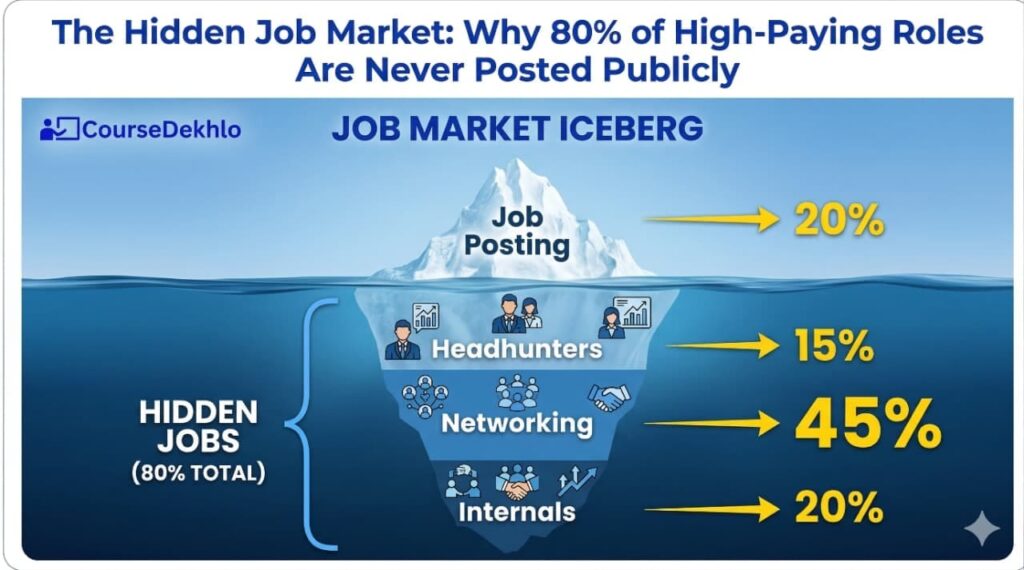
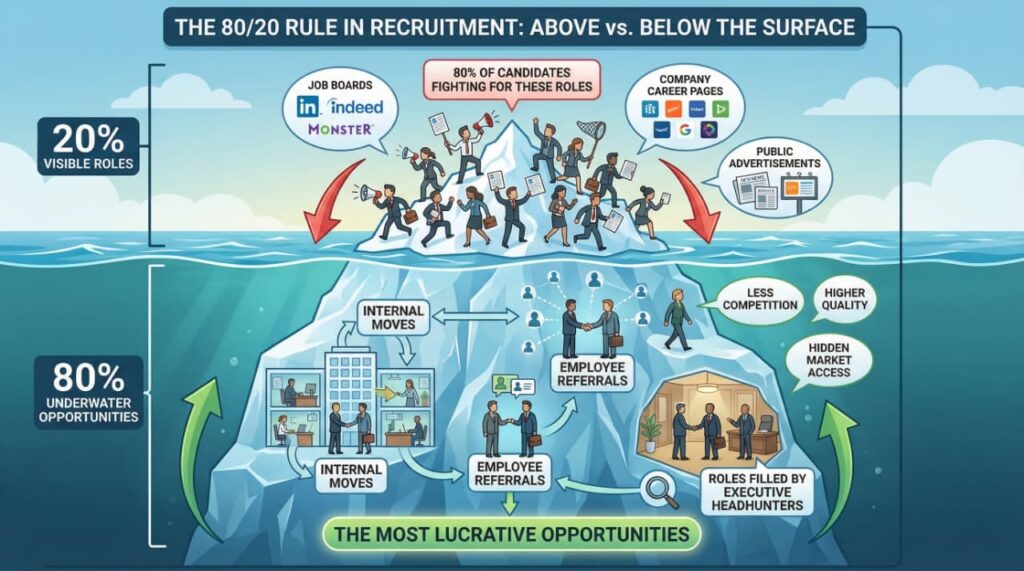
Many career experts estimate that a majority of good roles — often quoted as 70–80% — are never publicly posted; they’re filled through referrals, internal moves, or direct outreach before a job ad ever goes live. That hidden part of the market is where the best-paid, fastest-growing roles often end up.
Why companies don’t always post high-paying roles
This isn’t a conspiracy — it’s practical hiring.
1. The “flood” problem. One posting can attract hundreds or thousands of resumes. Sorting them costs time and attention. Companies prefer a smaller, higher-quality candidate pool.
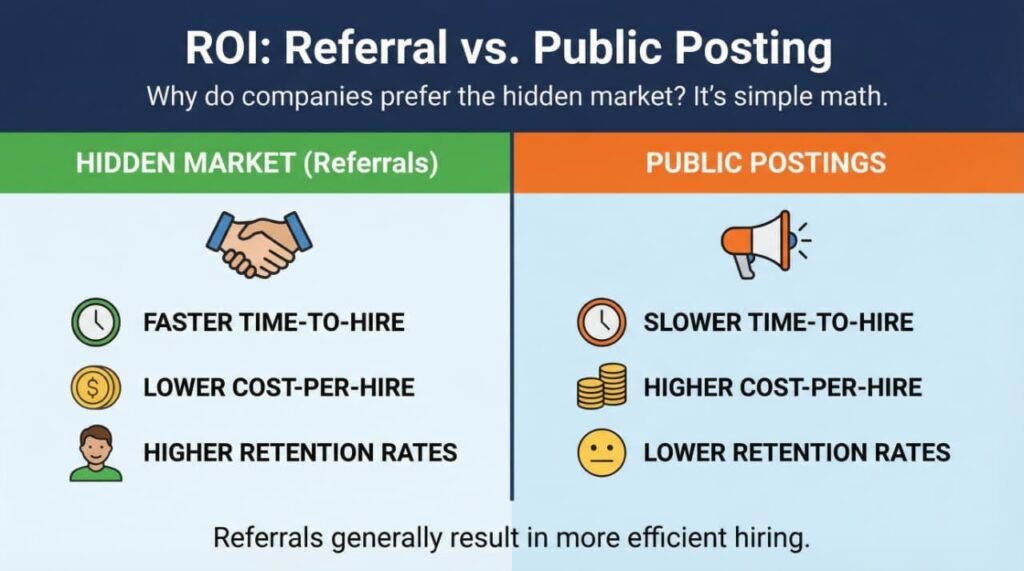
2. Cost & speed. Advertising, agency fees, and long interview cycles add up. If a manager can hire someone trusted through a referral or previous contact, it’s faster and cheaper.
3. Trust and risk. Hiring is about fit and reliability, not only skills. A referred candidate or someone known to the hiring team carries an informal “seal of approval.” Referral and internal candidates often convert to hires at much higher rates than blind applicants.
4. Internal candidate pools. Companies often keep a bench of previous applicants and interviewees and reuse that pool instead of reposting roles publicly. That means being noticed once can pay off later — even if you were rejected the first time.

How to tap the 80% — a simple playbook (actionable)
Stop treating job sites like a battlefield and start treating your career like a business you run. Here’s a short, practical playbook you can use today.
1) Make an Approach Letter, not another resume
A resume tells what you did. An Approach Letter answers: what will you do for them next month?
- Pick a company you admire.
- Find a current business problem they face (low conversion, weak social engagement, product-market fit gaps).
- Write 1 page: 1–2 sentences that show you understand the problem, 2–3 bullets on how you’d solve it, and an ask (“Can we talk for 15 minutes?”).
- This shifts you from “applicant” to “problem solver.”
2) Master the informational interview
Don’t ask, “Do you have jobs?” Ask, “Can I learn from you?”
- Message people with specific, short asks: “Can I get 10 minutes to ask how your team approaches X?”
- Be prepared: one smart question, one observation, and one follow-up.
Many hiring conversations start as informational chats — they end with hiring conversations if you add value.

3) Watch for hiring signals (and act fast)
Signals to monitor: funding news, product launches, leadership changes, new geographic expansion, or regulatory shifts. These almost always create hiring needs. Set alerts (Google Alerts, LinkedIn) and reach out the moment you see them. For example, startups often expand hiring after funding rounds; established firms hire when they launch a new product or enter a new market.
4) Build a short “networking routine.”
You don’t need to have 1,000 connections — you need relationships that are real. Try:
- 15 minutes per day: comment on 2 people’s posts, send 1 thank-you note, follow up on one past conversation.
- Help first: share an article, congratulate someone on a milestone, or introduce two people who should meet.
- Small consistent actions beat big, random outreach.
5) Keep a “candidate CRM.”
Treat contacts like leads. Track who you spoke to, what you discussed, and when to follow up. When a manager needs someone fast, the people in their short list get called — and that can be you.
A short example (realistic script)
Company: Fintech startup just raised seed funding.
You: A product analyst who can reduce churn.
Approach message (2–3 lines):
“Hi [Name], congrats on the fundraise — saw the product notes and noticed churn in the first 30 days. I’m a product analyst who cut churn by 18% at [Company]. Can I share two quick ideas for your onboarding in one short email?”
If you can back it with a one-page idea and drop it into the right person’s inbox, you’re competing with no one — you’re adding immediate value.
What to stop doing (short list)
- Don’t shotgun-apply to every job posting.
- Don’t lead with “Can you hire me?” — lead with value.
- Don’t treat networking like a one-time “ask.” It’s a relationship game.
FAQ (for CourseDekhlo readers)
I’m a fresher — can I still use this?
Absolutely. Start with informational interviews, show curiosity, do small projects for people (micro case studies), and get referrals. Freshers who add real value get noticed faster.
How long will this take to work?
Relationship-building is cumulative — but short, smart actions (one great approach letter or one helpful informational chat) often opens doors within weeks.
How to find hidden job market?
To find the hidden job market, build real connections, reach out directly to companies, ask for informational interviews, and look for hiring signals like funding, new projects, or team changes instead of only applying on job portals.
How to get access to the hidden job market?
Build real connections on LinkedIn and in your industry
Ask for informational interviews, not jobs
Send approach letters with solutions, not just resumes
Track hiring signals (funding, new products, leadership changes)
Get referrals from people already inside companies
Follow up and nurture relationships regularly
Position yourself as a problem-solver, not an applicant
Final word owns the game
The traditional apply-and-wait strategy is a lottery. The hidden job market is a strategy. It rewards the curious, the helpful, and the persistent. Move from “candidate” to “problem-solver,” and you stop competing with hundreds — you start competing with results.
✅ Drop your thoughts in the comments below — your experience could help thousands of other learners make smarter choices.
Let’s build a smarter learning community together.